Short answer: You can take out the loft water tank if you change how your home gets hot water, usually to a combi boiler or an unvented cylinder fed straight from the mains. Before you do, check your mains flow and pressure. Many older Bristol homes still have narrow or lead supply pipes, and those can make a mains fed system disappointing.
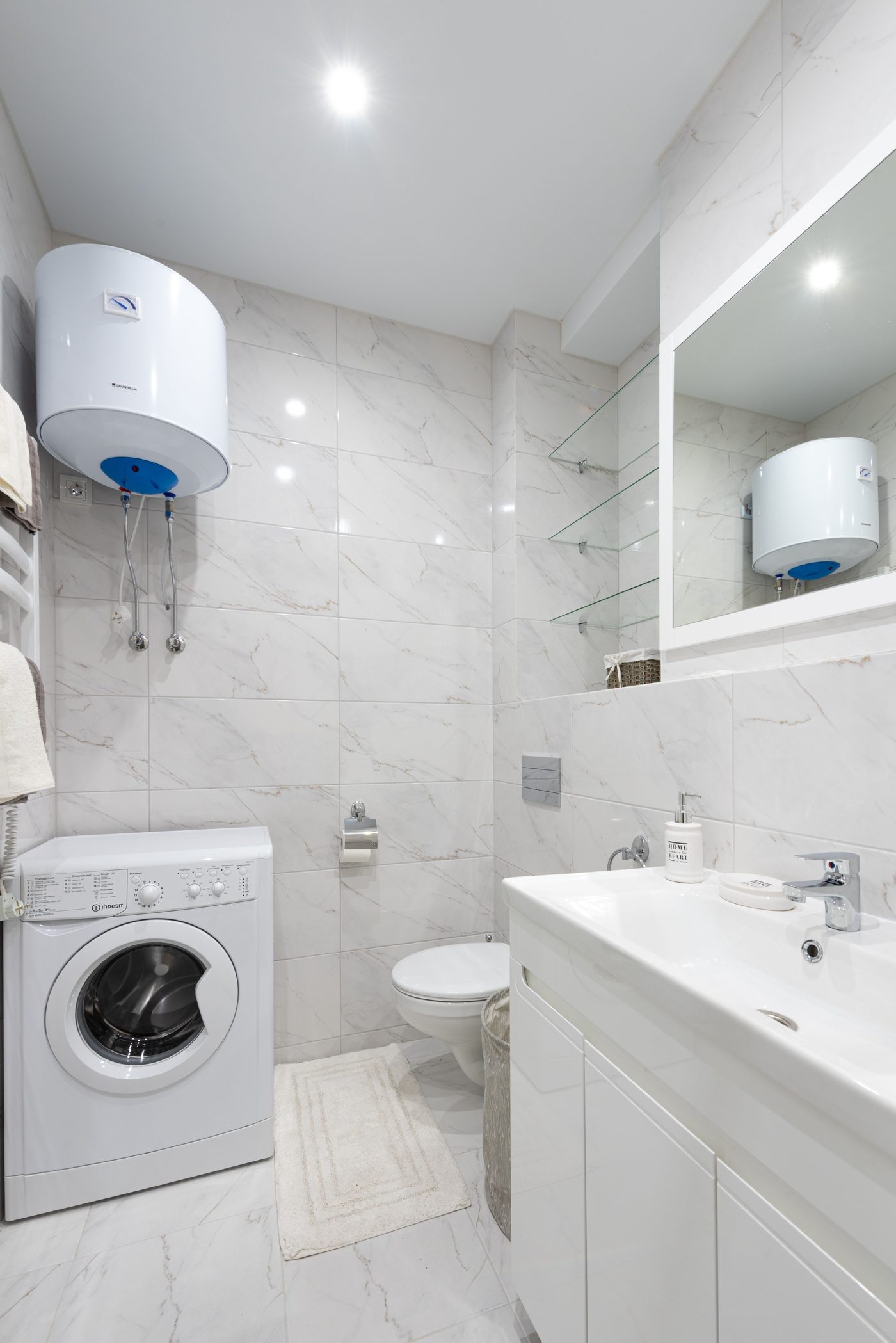
Lots of Bristol homes still have a cold water tank in the loft. It feeds the hot water cylinder and sometimes the bath taps and the toilet. People want it gone for good reasons. It takes up space, it can freeze, old galvanised tanks rust and plastic ones can sag. Taking it out is possible, but only as part of a wider change to your hot water. This guide explains the options and the checks first.
This comes up a lot in Henleaze and Westbury on Trym, where many homes are 1920s and 30s semis and detached houses that kept a gravity hot water system. Our Henleaze area page covers what we usually find in that housing, and our hot water cylinder page explains the cylinder work involved.
What the loft tank actually does
In a vented system, the tank in the loft holds cold water that has come in from the mains. Gravity feeds it down to the hot water cylinder in the airing cupboard. The cylinder also has an open vent pipe that runs back up and over the tank. That vent is a safety route if the water overheats.
Some homes also have a smaller tank beside it. That one tops up the radiators and is called a feed and expansion tank.
So the tank is not just storage. It is part of how the cylinder stays safe. You cannot simply cap it off.
The three common routes
| Option | What changes | Works best for | Things to check |
|---|---|---|---|
| Combi boiler | No cylinder and no tanks. Hot water heated on demand | Smaller homes, one bathroom, flats | Mains flow rate, one tap at a time |
| System boiler with unvented cylinder | Tanks go, cylinder replaced with a mains pressure one | Homes with two bathrooms, larger families | Mains flow, space for cylinder, discharge pipe route |
| Keep vented, replace the tank | New tank, new lagging, better insulation | Homes with weak mains or listed fabric | Loft access, tank size, freeze protection |
The right choice depends on how many people live there, how many bathrooms you have, and what your mains can deliver. Our guide to combi vs system boilers goes into that choice in more detail.
Check your mains before deciding
A combi boiler or an unvented cylinder only works as well as the pipe from the street. Before anything else, a plumber should do a flow and pressure test at the kitchen cold tap.
In Bristol this matters more than in some cities. Bristol Water says a large number of homes in its area built before the 1970s still have a lead supply pipe from the main. Those pipes are often narrow. Many interwar homes in BS9 were built in exactly that period.
If the flow is weak, there are options:
- Replace the supply pipe from the boundary stop tap into the house. Bristol Water’s lead replacement scheme may help if you are in an area it is working in. Read our guide to the Bristol lead pipe replacement scheme.
- Keep a stored system so you are not relying on the mains at the moment of use.
Hard water and the new system
Bristol Water classes all its water as moderately hard to very hard. When you move from a vented cylinder to a combi, the cold mains water goes straight into the boiler’s hot water heat exchanger. Government guidance on Building Regulations says that where hardness is above 200 ppm, the feed to water heaters and the hot water side of combi boilers should be treated to slow scale. In practice that means a scale reducer or softener. Budget for it from the start.
Freezing risk if you keep the tank
If you keep a vented system, look after the tank. Bristol Water’s winter advice is to lag pipes and tanks in unheated spaces such as lofts. A few points:
- Do not lay loft insulation under the tank. Leave the ceiling below it bare so a little warmth reaches it.
- Lag the sides and fit a lid with insulation on top.
- Lag the overflow pipe and the vent pipe as well.
- Check the overflow outlet outside is not dripping. A dripping overflow often means a worn float valve.
Who can do the work
- Combi or system boiler. Any gas work must be done by a Gas Safe registered engineer. Ask to see their ID card and check it on the Gas Safe Register. They will notify the job so you get a Building Regulations compliance certificate.
- Unvented cylinder. In England this falls under Part G3 of the Building Regulations. The installer must be competent in unvented systems and the work is notifiable.
- Electrics. Any new circuit for an immersion or controls must meet Part P.
What happens on the day
A typical changeover in a Henleaze semi looks like this:
- Flow test at the kitchen tap and a look at the supply pipe where it enters.
- Drain down the tank, the cylinder and the heating.
- Remove the old tanks from the loft and cap the redundant pipes.
- Fit the new boiler or cylinder, plus a filter and scale protection.
- Refill, flush the heating and add inhibitor.
- Commission, test and hand over the paperwork.
What affects the price
We do not publish a figure. The price is confirmed after a survey. It depends on the system you choose, whether the supply pipe needs upgrading, how hard the loft is to reach, and whether the heating needs flushing. If you are leaning towards a new boiler, our new boiler page explains the quote process.
Quick questions
Can I just remove the loft tank and keep my hot water cylinder?
Not with a vented cylinder. A vented cylinder relies on the loft tank for its cold feed and its safety vent. To lose the tank, the cylinder has to be replaced with an unvented one or the system changed to a combi boiler.
Will my water pressure be good enough without the loft tank?
It depends on the pipe that brings water from the street. A flow test at the kitchen tap shows how many litres a minute you get. Homes in Bristol built before the 1970s may still have a lead supply, which Bristol Water says is common across its area.
Is a loft tank a problem in winter?
It can be. Bristol Water's winter advice is to lag pipes and tanks in unheated spaces such as lofts. An unlagged tank above a well insulated ceiling is one of the coldest spots in the house.
Is there anything else in the loft I need to remove?
Often there is a small second tank called a feed and expansion tank, which tops up the heating. If the heating is changed to a sealed system, that tank can go too.
Last updated 23 October 2026. Written for homes in Bristol. Rules can change, so check the linked sources for the latest position.