Short answer: If your immersion heater is not working, check the switch, the fuse or breaker, the timer and the thermostat setting first. If those are fine, the element has probably failed or the thermostat cut out has tripped. In Bristol, scale from hard water is a common reason elements fail early. Replacing one means draining part of the cylinder.
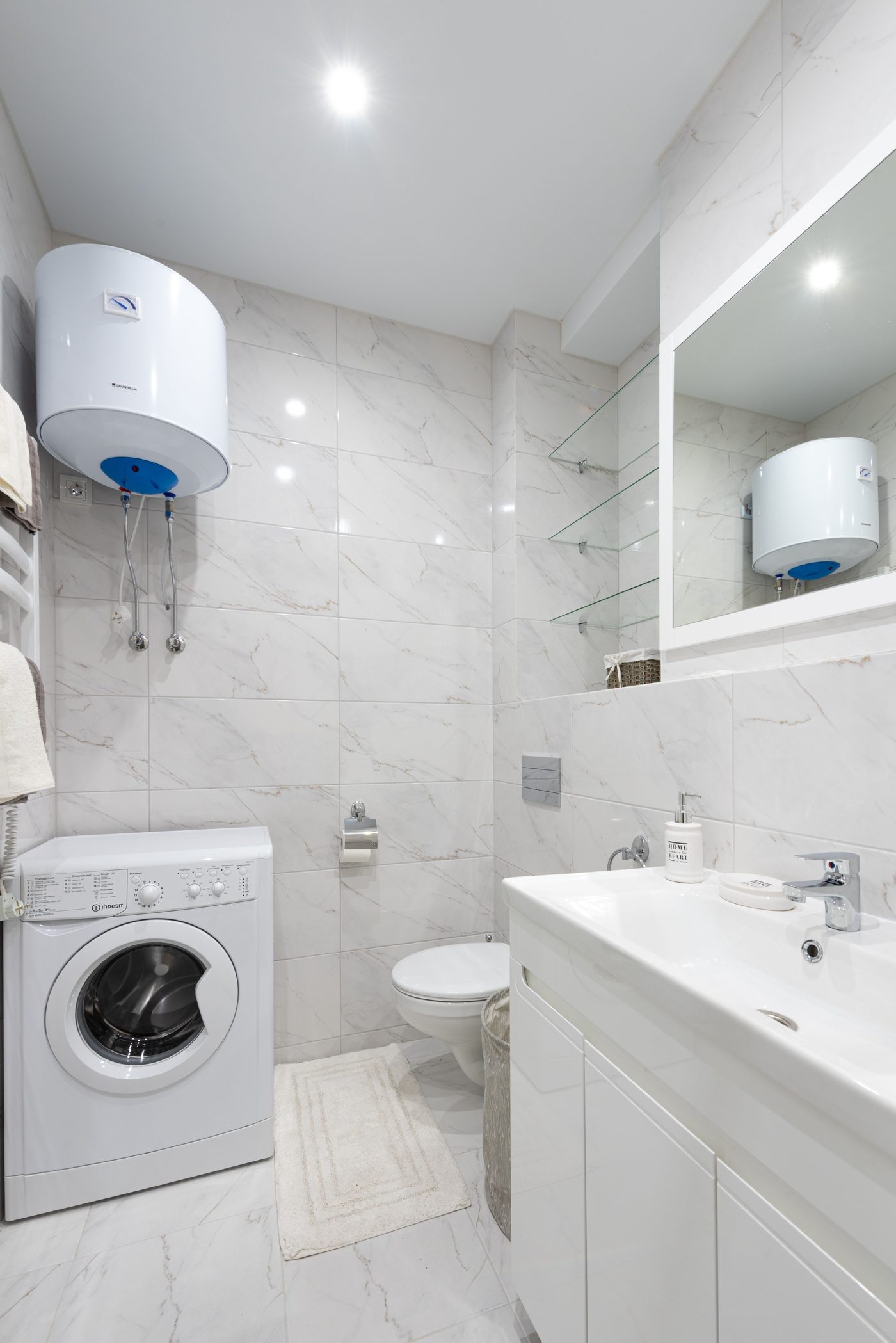
An immersion heater is an electric element inside your hot water cylinder. Some homes use it as the main way to heat water. Others keep it as a backup for when the boiler is off. When it stops working you usually notice cold baths, slow heating or a tripping fuse board.
Many Bristol homes still have a copper cylinder in an airing cupboard with an immersion on top. That is very common in the 1920s and 30s semis of Henleaze and Westbury on Trym, and in Victorian terraces that kept their gravity hot water. Our Henleaze area page covers the hot water systems we usually find in BS9. This guide covers what you can safely check yourself and what needs a trade. Our hot water cylinder page explains how we handle repairs.
Safe checks you can do first
Only do these if you are comfortable. Never take the cover off the immersion while the power is on.
- Check the switch. Most immersions have a wall switch near the cylinder, often with a red neon light. Make sure it is on.
- Check the fuse board. Look for a tripped breaker labelled immersion or water heater. If it trips again as soon as you reset it, leave it off.
- Check the timer. Many Bristol homes on older electricity tariffs have a timer or a dual switch for day and night heating. A power cut can reset the clock.
- Check the boost button. If you have one, press it and wait an hour. If the water warms, the timer is the problem.
- Feel the pipe. After an hour or so of heating, the pipe leaving the top of the cylinder should be warm.
If none of that helps, the fault is most likely inside the cylinder.
The usual causes
| Symptom | Likely cause | What it involves |
|---|---|---|
| No heat at all, nothing trips | Failed element or thermostat | Test, then replace the failed part |
| No heat, reset button on thermostat has popped | Overheat cut out tripped | Find why it tripped, often a faulty thermostat |
| Breaker trips when switched on | Element breaking down | Element replacement |
| Water only warm, takes ages | Heavy scale on the element | Element replacement, check scale in the cylinder |
| Hot water only at the top | Element is a short top entry type | Normal for some cylinders, or a longer element may help |
| Rumbling or crackling | Scale on the element boiling off | Element will likely fail soon |
Why Bristol water is hard on elements
Bristol Water says that all the water in its area is moderately hard to very hard because of the limestone it flows through. When that water is heated, calcium comes out as limescale. An immersion element is the hottest surface in the cylinder, so scale forms on it first.
As the scale thickens, the element has to run hotter to pass its heat into the water. That stresses the metal sheath until it splits. You often see a white crust on the old element when it comes out, sometimes thick enough to fill the gaps between the loops.
Bristol Water suggests keeping stored water below 60 C to reduce scale. With a cylinder, that has to be weighed against legionella guidance, which asks for stored water to reach 60 C. We set the thermostat to a safe level and deal with scale in other ways. Our guide to Bristol’s hard water covers softeners and scale reducers.
What replacing an element involves
Changing an immersion element is not a quick swap of a light bulb. The plumbing steps are:
- Isolate the electricity and prove it is dead.
- Shut off the cold feed to the cylinder.
- Drain the cylinder down below the element. On a vented copper cylinder in a Henleaze airing cupboard, that usually means running a hose from the drain cock to a sink or outside.
- Undo the element with a large immersion spanner. Old ones can be stuck fast with scale, so care is needed not to damage a thin copper cylinder.
- Fit the new element with a new washer, refill, check for leaks and bleed air out.
- Reconnect, test and set the thermostat.
If the cylinder is old and thin, there is a risk it will not survive the element coming out. We will say so before starting. At that point it can make more sense to talk about a new cylinder. If you are thinking about that, read our guide on whether to take out the loft water tank.
Unvented cylinders are different
If your cylinder has no loft tank and sits at mains pressure, it is unvented. Elements on these are often a different design, and the cylinder has safety valves that must not be disturbed by someone without the right training. In England, unvented systems are covered by Part G3 of the Building Regulations. Ask for someone competent in unvented systems.
Plumber or electrician
Swapping an element like for like on the existing circuit is usually treated as a repair, not new work. A new circuit, a new switch position or a new consumer unit connection is notifiable electrical work under Part P. If the fault is in the wiring, the switch or the timer, you need an electrician.
What affects the price
We do not quote a set figure. The price is confirmed after a look at the job. It depends on:
- Whether it is the element, the thermostat or the wiring.
- The type and length of element your cylinder takes.
- How hard it is to drain the cylinder and how badly the old element is scaled in.
- Whether the cylinder is vented or unvented.
While you wait
If the immersion is your only hot water, boil a kettle for washing up and keep the switch off if it has been tripping. If your boiler also heats the cylinder, switch the hot water on the boiler programmer to keep you going.
Quick questions
Do I need a plumber or an electrician for an immersion heater?
Often both skills are needed. Draining the cylinder and changing the element is plumbing work. The wiring, switch and circuit must meet Part P of the Building Regulations. A new circuit is notifiable work. Many plumbers can swap an element like for like and test it, but faults in the wiring are for an electrician.
Why does my immersion heater trip the electrics?
A tripping immersion usually means the element has broken down and is leaking current to earth. Scale and age are the usual causes. Leave it switched off and get it checked. Do not keep resetting the breaker.
How long should an immersion element last in Bristol?
There is no fixed answer. Hard water shortens element life because scale builds up on the surface and makes it run hotter. Bristol Water classes its whole area as moderately hard to very hard, so elements here tend to need replacing sooner than in soft water areas.
Last updated 23 October 2026. Written for homes in Bristol. Rules can change, so check the linked sources for the latest position.