Short answer: A leak under the floorboards usually shows as a damp patch, a musty smell, a ceiling stain below, falling boiler pressure or a meter that moves with nothing on. Turn off the stop tap if the damage is spreading. The leak is then traced by isolating sections of pipe and testing, so only the boards over it need lifting.
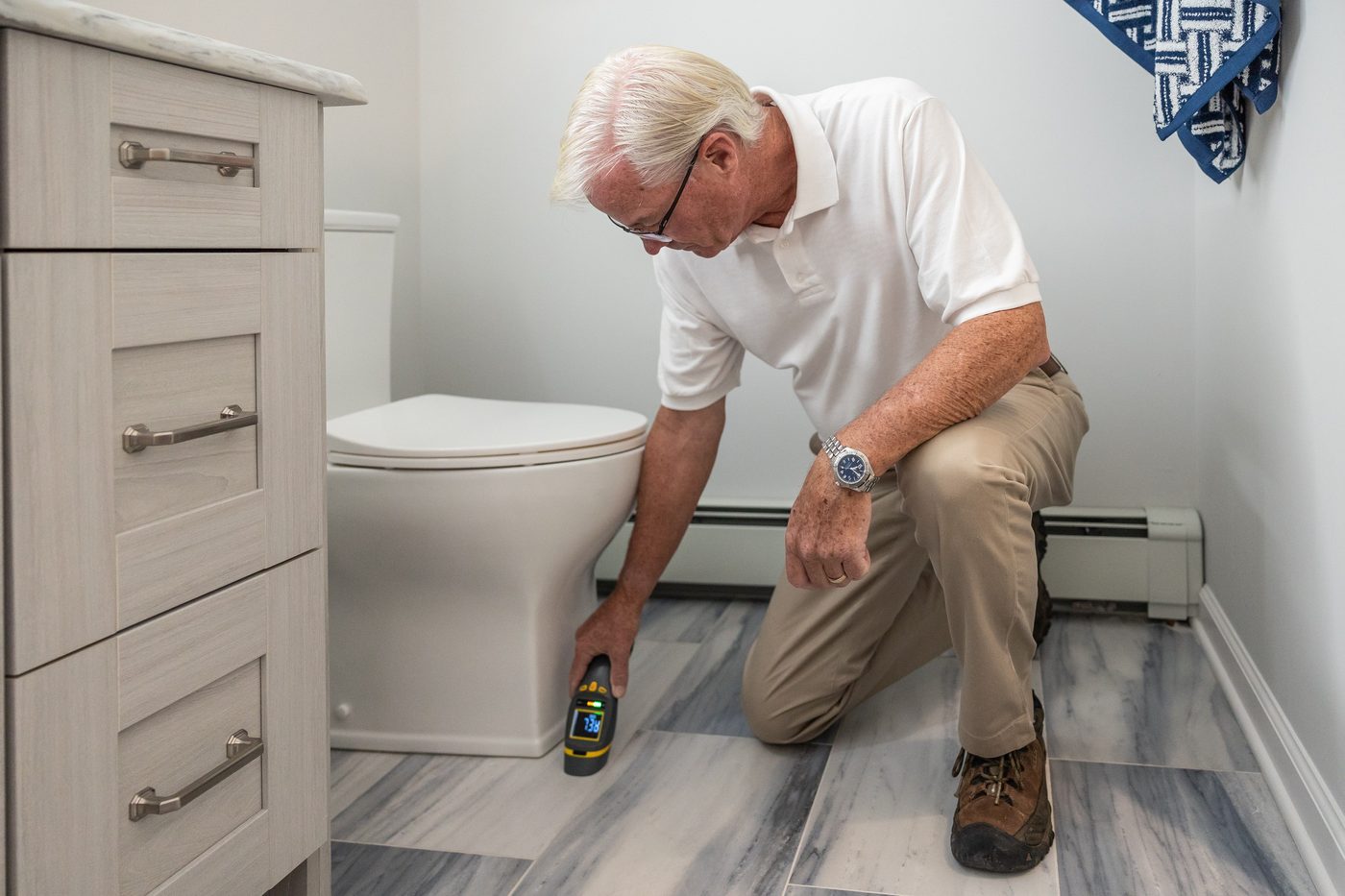
A leak under the floorboards is hard to spot because you cannot see it. Water runs along joists, soaks into plaster and can show up a metre or two away from where the pipe is actually leaking. By the time you notice, it may have been dripping for weeks.
In Clifton and Hotwells this is a common call. Many of the tall Georgian and Regency houses have been split into flats, so one person’s floor is another person’s ceiling. Pipes run long distances under suspended timber floors, through old notches in joists and past original lath and plaster ceilings. A small leak on a second floor flat can show up as a stain two floors down. Our Clifton area page explains more about the housing there.
Signs of a leak under the floor
| Sign | What to check |
|---|---|
| Stain or bulge on the ceiling below | Note when it appeared and whether it grows after showers or heating |
| Soft or cupped boards | Water soaking into the timber from below |
| Musty smell or mould at skirting | Slow leak over a long time |
| Boiler pressure dropping | Leak on the heating pipes |
| Water meter moving with nothing on | Leak on a water supply pipe |
| Warm patch on the floor | Leak on a hot water or heating pipe |
| Sound of hissing or dripping at night | Pressurised pipe leak nearby |
First steps if water is coming through
- Turn off the water at the inside stop tap. In Clifton flats it can be in a kitchen cupboard, under the stairs, in a hallway cupboard or in the basement for the whole building.
- Turn off the heating if the leak might be on radiator pipes.
- Switch off electrics at the fuse board if water is near lights or sockets. Do not touch switches with wet hands.
- Tell the flat below and the managing agent or freeholder.
- Take photos for insurance.
- Put down towels and containers to catch drips.
If you do not know where the stop tap is, find out now. In converted buildings there may be one per flat and one for the whole house.
How the leak is traced
Ripping up a whole floor to look for a leak is slow, messy and often not needed. A plumber narrows it down first.
Isolate the systems. Turn off the cold mains. If the meter stops, the leak is on the water supply. If the boiler keeps losing pressure, the leak is on the heating. Our guide to a water meter leak test explains the first part.
Pressure test sections. Valves are closed to split the pipework into runs. Each run is tested to see which one is losing pressure.
Use detection tools. Moisture meters show where timber or plaster is wet. Thermal cameras can show warm water on a heating or hot pipe. Acoustic listening can pick up the sound of a pressurised leak.
Lift the right boards. Once the run is known, only the boards over it are lifted. In a Georgian room with long pine boards, this is done carefully so they can go back.
Why Clifton floors are tricky
Clifton houses have features that make leaks harder:
- Long pipe runs. Kitchens and bathrooms in conversions often sit far from the original risers, so pipes travel across whole floors.
- Old notches in joists. Pipes were often laid in notches cut across the tops of joists, right under boards that have been nailed down many times.
- Mixed pipe materials. Old lead or iron, then copper, then plastic, all joined together. Joints between different materials are common failure points.
- Listed buildings. Many Clifton houses are listed. Lifting original boards, cutting historic plaster or changing pipe routes can need care, and in some cases listed building consent. Bristol City Council’s conservation pages explain the rules for the 33 conservation areas in the city.
Common leak points we find
- Compression joints that have loosened over years of heating and cooling.
- Pinholes in old thin copper, often near where a pipe touches a joist.
- Radiator valve tails under the floor.
- Nails or screws that went through a pipe when boards were refitted.
- Push fit joints that were not fully seated.
- Waste pipes from baths and showers, which leak only when the bath drains.
That last one is easy to miss. A waste leak does not show on the water meter or the boiler pressure. The clue is a stain that appears after someone has a bath or shower.
Hard water and old pipes
Bristol Water says its supply is moderately hard to very hard. Hard water does not usually cause leaks on its own, but scale can make valves stick and stop stop taps closing fully. If your stop tap is stiff, get it freed or replaced. You will need it in a leak.
Insurance and flats
Most buildings insurance covers escape of water damage. Many policies also cover trace and access, which is the cost of finding the leak and putting the floor back. In a converted Clifton house, the building policy is often held by the freeholder or a residents’ company. Report it to them early.
After the repair
Once the leak is fixed:
- Let the floor and ceiling dry before redecorating. That can take weeks.
- Keep an eye on the ceiling below for a few days.
- If the leak was on the heating, top up and check the boiler pressure.
Our leak detection page explains how we plan a trace and repair visit. We do not publish fixed prices. The cost is confirmed after a look at the job, and depends on how far the pipes run, how many systems need testing and how many boards need lifting.
Quick questions
How do I know if a leak is under my floor?
Common signs are a damp or stained ceiling in the room below, boards that feel soft or have cupped, a musty smell, mould along a skirting, and a water meter that keeps moving with everything off. A heating leak also shows as the boiler pressure dropping.
Is a leak under floorboards covered by insurance?
Many home insurance policies cover escape of water damage, and some also cover the cost of finding the leak, often called trace and access. Check your policy before work starts and take photos.
Who pays if my leak damages the flat below?
That depends on the lease, your insurance and the building insurance. In converted houses the building is often insured as a whole. Tell the managing agent or freeholder straight away, as well as your neighbour.
Can a plumber find the leak without lifting the whole floor?
Usually yes. By isolating parts of the system and pressure testing, the leak can be narrowed to one pipe run. Then only the boards over that run need lifting.
Last updated 23 October 2026. Written for homes in Bristol. Rules can change, so check the linked sources for the latest position.